

Bariatric Surgery in Riverside, CA: Procedures, Eligibility, Risks, and Recovery
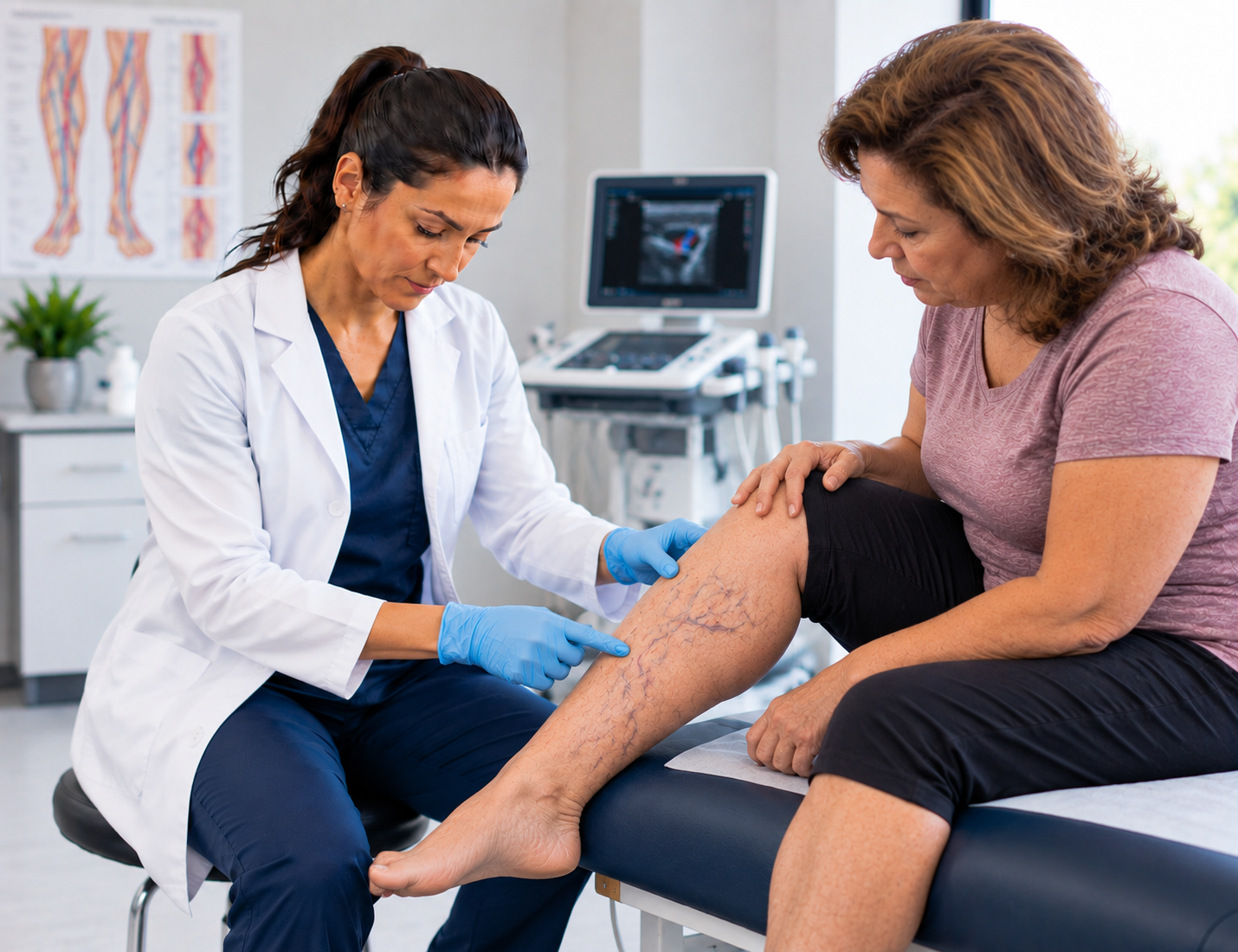
Legs that ache after a long day. Ankles that swell by evening. Veins that have become harder to ignore, whether they’re small and web-like or larger and rope-like. These symptoms may be more than a cosmetic concern.
If you’re considering vein treatment in Riverside, understanding what’s actually causing your symptoms, and which treatments are available, is a useful place to start before booking anything.
This guide breaks down what’s going on beneath the surface, which treatments are commonly used today, what a proper evaluation involves, and how to tell the difference between a provider who investigates the underlying cause and one who’s just treating what’s visible.
Key Takeaways
- Varicose and spider veins are linked to vein valves that no longer close properly, allowing blood to pool instead of flowing efficiently back to the heart.
- Common treatments include sclerotherapy, radiofrequency ablation (RFA), endovenous laser therapy (EVLT), ambulatory phlebectomy, and compression therapy, each suited to different vein types and clinical findings.
- Many minimally invasive vein procedures are performed in-office and allow patients to walk shortly afterward, though recovery details vary by procedure and individual.
- Chronic venous disease can progress in some patients, though the course varies and isn’t fully predictable, which is why medical guidelines recommend evaluation rather than a wait-and-see approach based on appearance alone.
- Insurance coverage depends on documented medical necessity and your specific plan. Purely cosmetic treatment is typically not covered.
- Duplex ultrasound is the diagnostic standard for evaluating venous reflux and should come before any treatment recommendation.
Why Veins Develop This Way
Veins rely on one-way valves to keep blood moving upward, against gravity, back toward the heart. When those valves weaken or stop closing fully, a condition called venous reflux, blood can pool in the lower leg instead of continuing on. That pooling is associated with the bulging, twisted appearance of varicose veins, and with the heavy, achy feeling many people notice by the end of the day.
This broader condition is known as chronic venous insufficiency. Genetics, pregnancy, prolonged standing or sitting, obesity, and prior blood clots are all recognized contributing factors. According to guidelines from vascular and venous medical societies, duplex ultrasound is considered the diagnostic test of choice for confirming venous reflux, since it shows exactly which veins are involved and how blood is actually flowing, information a visual exam alone can’t provide.
Chronic venous disease can worsen over time in some people, although its course varies significantly between patients and isn’t reliably predictable from symptoms alone. That’s the honest reason to get evaluated rather than wait: not because progression is guaranteed, but because it’s genuinely hard to predict without a proper assessment.
Types of Vein Treatment Available Today
Vein treatment has changed substantially over the past two decades. Vein stripping under general anesthesia, once the standard, has largely been replaced by minimally invasive, ultrasound-guided procedures. Here’s an overview of what’s commonly used.
| Treatment | Typical Use | Important Qualification |
|---|---|---|
| Sclerotherapy | Spider veins and selected smaller varicose veins | May require multiple sessions |
| Radiofrequency ablation (RFA) | Larger veins with confirmed reflux | Requires ultrasound-based assessment first |
| Endovenous laser therapy (EVLT) | Larger veins with confirmed reflux | Not every patient or vein is a suitable candidate |
| Ambulatory phlebectomy | Selected visible, bulging surface veins | Often combined with RFA or EVLT |
| Compression therapy | Symptom management or part of a treatment plan | Does not permanently close a faulty vein |
Sclerotherapy involves injecting a solution into the vein, causing it to irritate the vein wall, collapse, and gradually fade. It’s a common starting point for spider veins and some smaller varicose veins.
Radiofrequency ablation (RFA) uses heat delivered through a thin catheter to close off a larger vein with confirmed reflux. Blood reroutes to healthier nearby veins, and the treated vein is gradually reabsorbed over time.
Endovenous laser therapy (EVLT) works on a similar principle using laser energy instead of radiofrequency, and is used for comparable cases based on ultrasound findings.
Ambulatory phlebectomy removes veins close to the skin’s surface through tiny punctures, often paired with RFA or EVLT when both a larger underlying vein and visible surface veins are present.
Compression therapy supports circulation and can reduce symptoms, but it manages the condition rather than closing the faulty vein. It’s often used as part of a broader treatment plan or before deciding whether a procedure is appropriate.
These options should be treated as a starting point for a clinical discussion with your provider, not an interchangeable menu. Current guidelines identify endothermal ablation (RFA or EVLT) as a recommended intervention specifically for confirmed truncal reflux, which is why ultrasound findings, not vein appearance, generally guide the recommendation.
Signs Worth Getting Evaluated For
You don’t need visibly bulging veins to have a vein issue worth discussing with a provider. Symptoms that commonly prompt an evaluation include:
- Aching or throbbing legs, especially after standing or sitting for long periods
- Swelling around the ankles that’s more noticeable by the end of the day
- Visible spider veins or varicose veins
- Skin discoloration or texture changes near the ankles
- Restless legs or nighttime cramping
- A heavy or tired feeling in the legs that improves with elevation
If several of these sound familiar, an evaluation can help clarify what’s actually happening and whether treatment, monitoring, or conservative management makes sense for your situation.
What a Vein Evaluation Actually Involves
A thorough evaluation typically includes:
- A detailed symptom and medical history, covering pain, swelling, family history, and duration of symptoms
- Duplex ultrasound mapping, to identify which veins are affected and how blood is flowing
- A discussion of treatment options, based on ultrasound findings and the extent of the condition
- Insurance verification, to clarify what your specific plan requires or covers
Recommending treatment for a visible varicose vein without first identifying the underlying vein feeding it is a common reason treatments underperform or veins appear to return. A thorough provider maps the full picture with ultrasound before proposing a plan.
What Recovery Involves
Recovery expectations vary by procedure, anesthesia used, individual health, and your treating clinician’s specific instructions. In general terms:
Many minimally invasive vein procedures, such as sclerotherapy, RFA, and EVLT, allow patients to walk shortly afterward and go home the same day. Some bruising, tightness, or mild soreness near the treated area is common in the days following treatment. Compression stockings are frequently recommended afterward, though the type and duration vary by procedure and patient, and your provider will advise on what’s appropriate for your case.
Return to work and normal activity timelines also vary. Some patients resume desk work quickly, while more physically demanding jobs or larger procedures may call for additional recovery time. Your provider is the best source for a timeline specific to your treatment plan.
What Can Affect the Cost of Vein Treatment
Vein treatment costs vary based on several factors, including:
- The specific procedure recommended and how many veins are involved
- Whether diagnostic ultrasound and follow-up visits are included
- Whether the treatment is classified as medically necessary or cosmetic
- Your individual insurance plan and benefits
Insurance-covered, medically necessary treatment (typically involving documented symptoms and reflux confirmed by ultrasound) is generally handled differently, both in process and cost, than self-pay cosmetic treatment for spider veins alone. Because pricing depends on your specific evaluation and plan, an individualized estimate from your provider’s office is more reliable than a general price range.
Does Insurance Cover Vein Treatment?
Coverage depends on your individual plan, the specific procedure, and documentation of medical necessity. Some insurers require a documented trial of conservative treatment, such as compression therapy, before authorizing certain procedures. It’s worth checking your specific benefits and any prior authorization requirements directly with your insurer and your provider’s office before scheduling.
Purely cosmetic spider vein treatment, without documented symptoms, is typically not covered.
Choosing a Vein Provider
Vein treatment sits at an intersection of cosmetic and medical care, and provider quality varies. When researching a specialist, consider asking about:
- Board certification in vascular surgery, phlebology, or a related specialty
- Whether duplex ultrasound is performed in-house as part of the evaluation
- Their approach to identifying and treating the underlying vein, not just the visible one
- How they explain expected outcomes and realistic timelines
- Whether conservative options are discussed alongside procedural ones, where appropriate
If a provider recommends treating a visible vein without ever performing an ultrasound, it’s reasonable to ask why. The visible vein is often a symptom, not the full picture.
What Can Vein Treatment Help Improve?
Outcomes vary by individual, the specific condition being treated, and how advanced it is at the time of evaluation. That said, patients pursuing vein treatment commonly seek relief from:
- Aching, heaviness, or fatigue in the legs
- Visible swelling
- The cosmetic appearance of varicose or spider veins
- Discomfort that interferes with standing, sitting, or daily activity
A qualified provider can walk through which of these are realistic goals for your specific case based on your ultrasound findings and overall health, rather than presenting a single expected result for every patient.
Ready to Take the Next Step?
If you’re in Riverside, CA, and dealing with legs that ache, swell, or have become a source of self-consciousness, Mission Surgical Clinic can help you understand what’s causing your symptoms. A proper evaluation, including duplex ultrasound, gives you and your provider the information needed to discuss which treatment options, if any, fit your situation. Learn more at Mission Surgical Clinic.
Schedule a consultation to discuss your symptoms, evaluation options, and possible treatment plan.
Frequently Asked Questions
What is the most effective treatment for varicose veins?
Effectiveness depends on the size and location of the vein and whether ultrasound confirms reflux. RFA and EVLT are commonly used for larger veins with confirmed reflux, while sclerotherapy is often used for smaller varicose veins and spider veins. Your provider’s recommendation should be based on your specific ultrasound findings.
Is vein treatment painful?
Most minimally invasive vein procedures use local anesthesia, and patients commonly describe mild discomfort rather than significant pain. Some tightness or soreness afterward is common and typically manageable, though individual experiences vary.
How long do vein treatment results last?
A vein that has been successfully closed or removed does not reopen, but venous insufficiency is a chronic condition, and new veins can develop over time, particularly if underlying risk factors persist. Some patients require follow-up treatment for new veins later on.
Will my varicose veins come back after treatment?
The specific treated vein won’t reopen, but since chronic venous disease can affect other veins over time, new varicose or spider veins may develop. Compression garments and lifestyle factors may help manage this risk, though individual outcomes vary.
Does insurance cover vein treatment?
Coverage depends on documented medical necessity, your specific insurance plan, and sometimes a required trial of conservative treatment first. Purely cosmetic treatment is generally not covered. Confirming your specific benefits with your insurer is the most reliable way to know what’s covered.
How soon can I return to work after vein treatment?
This varies by procedure and individual. Some patients return to desk-based work quickly, while physically demanding jobs may require more recovery time. Your treating clinician can give you a timeline specific to your procedure and health.
Related posts


