

Diabetic Wound Care Near You: Support Healing & Prevent Complications
A cut on your foot should heal in a couple of weeks. A surgical incision should close up and fade. But for some people, that’s not what happens.
The wound just sits there. It doesn’t get smaller. It doesn’t close. Some days it looks a little worse than the day before, and no amount of bandaging or waiting seems to change that.
If this sounds familiar, you’ve probably already tried the usual advice: keep it clean, keep it covered, give it time. And when that doesn’t work, you start searching for something more, which is often how people find their way to hyperbaric oxygen therapy near me.
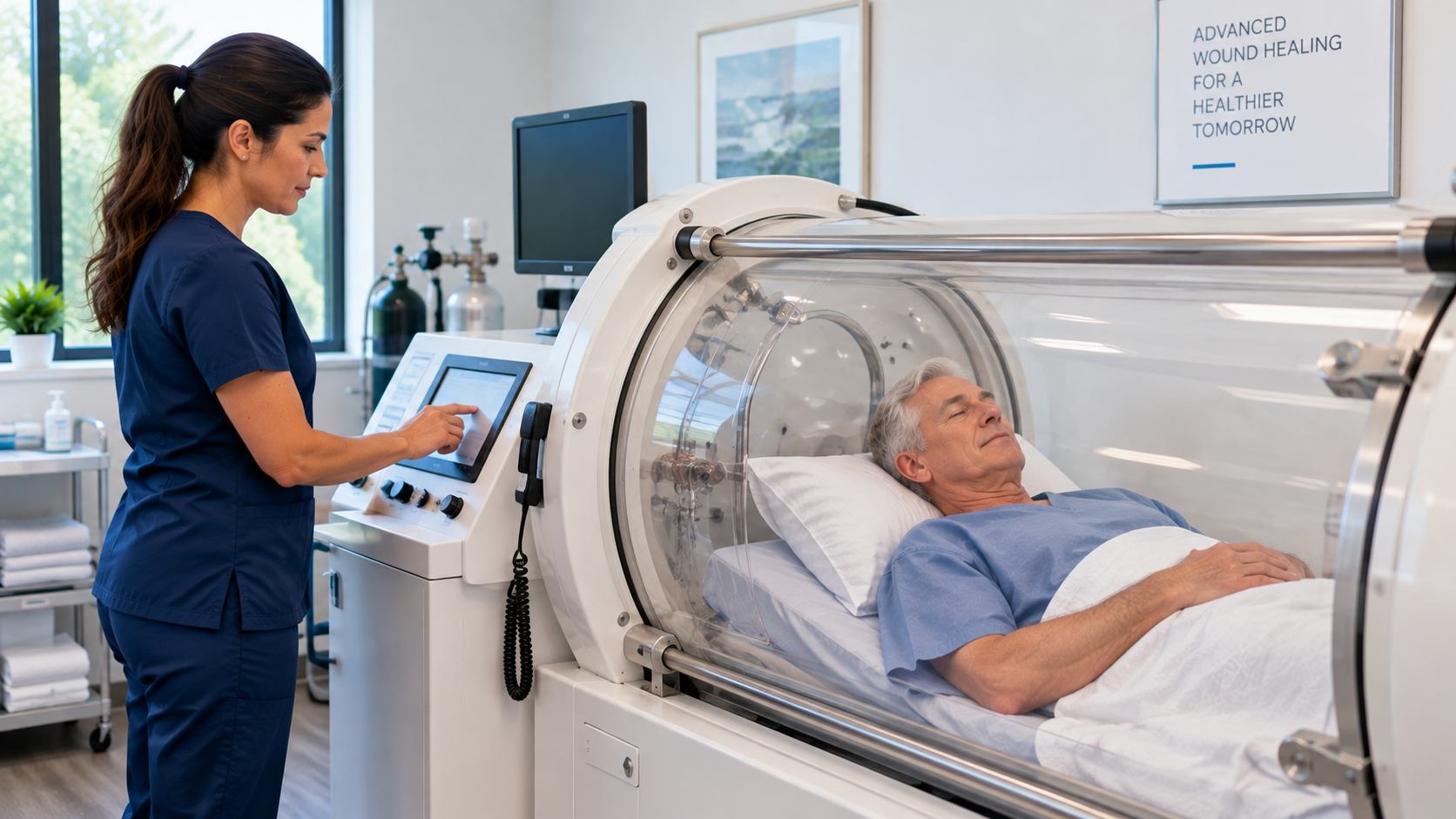
It’s a treatment that sounds unusual the first time you hear about it. You sit inside a pressurized chamber and breathe oxygen at a concentration prescribed for your treatment. The biological effects of increased oxygen under pressure are well understood, and HBOT has established medical uses for several specific conditions. For people dealing with slow healing wounds, radiation damage, or certain infections, it can be an important part of finally getting a wound to close.
This guide walks through what hyperbaric oxygen therapy actually does, who it’s designed to help, what a session feels like, and what to look for when you’re choosing a provider near you.
Key Takeaways
Hyperbaric oxygen therapy (HBOT) delivers concentrated oxygen at increased pressure to support the body’s natural wound healing process.
It’s commonly used for diabetic foot ulcers, non-healing surgical wounds, radiation injury, and certain infections that haven’t responded to standard treatment.
Sessions are painless and typically last 90 minutes to two hours in a pressurized chamber.
Most treatment plans involve multiple sessions over several weeks, depending on the condition being treated.
HBOT increases oxygen availability in the blood and tissue, which can support new blood vessel growth and aid the body’s own repair process.
Choosing an experienced provider who evaluates your wound thoroughly before starting treatment matters just as much as the therapy itself.
What Is Hyperbaric Oxygen Therapy?
Hyperbaric oxygen therapy is a medical treatment where you breathe near pure oxygen inside a chamber that’s pressurized higher than normal air pressure.
Under normal conditions, your red blood cells carry most of the oxygen your body needs. But when you’re inside a hyperbaric chamber, the increased pressure allows oxygen to dissolve directly into your plasma, the fluid part of your blood. That extra oxygen reaches areas of the body where circulation is poor or where tissue has been damaged, places your blood cells alone might struggle to reach efficiently.
This matters because healing depends on oxygen. Without enough of it, wounds stall, infections take hold more easily, and damaged tissue can’t repair itself the way it’s supposed to.
For people who’ve been searching for hyperbaric oxygen therapy near me because standard wound care hasn’t worked, this extra oxygen supply is often exactly what’s missing.
How Does HBOT Actually Help the Body Heal?
The pressure and oxygen combination inside the chamber does more than just deliver a temporary oxygen boost. It triggers several changes in the body that support long term healing.
It Encourages New Blood Vessel Growth
Oxygen rich tissue signals the body to build new capillaries, which improves blood flow to areas that were previously undersupplied.
It Supports the Body’s Response to Certain Infections
Certain bacteria, especially the type that thrive in low oxygen environments, struggle to survive when tissue oxygen levels rise. HBOT can also strengthen the immune cells responsible for clearing infection, though it’s used alongside antibiotics, drainage, or debridement rather than in place of them.
It Reduces Swelling in Damaged Tissue
Higher oxygen levels help control inflammation and fluid buildup, which allows healing to progress instead of stalling.
It Supports Collagen Production
Collagen is the structural protein wounds need to close and rebuild skin. Oxygen is a required ingredient for the body to produce it effectively.
Put together, these effects are why hyperbaric oxygen therapy is used for conditions that involve stubborn, slow healing tissue rather than everyday cuts and scrapes.
Conditions Hyperbaric Oxygen Therapy Can Treat
HBOT isn’t a general wellness treatment. It’s typically recommended for specific medical conditions where low tissue oxygen is part of the problem.
Diabetic Foot Ulcers
Diabetes often damages blood vessels and reduces circulation to the feet, which makes wounds in this area especially slow to heal and prone to infection. For selected diabetic foot ulcers that haven’t responded adequately to standard care, HBOT may support healing and help reduce the risk of serious complications.
Non-Healing Surgical Wounds
Some surgical incisions fail to heal properly due to poor blood supply, infection, or complications from other health conditions. HBOT can help restart the healing process when standard wound care isn’t enough.
Radiation Injury
Radiation treatment for cancer can damage blood vessels in the treated area, sometimes leading to tissue breakdown months or years later. HBOT increases oxygen availability to this affected tissue and can promote the growth of new blood vessels over time, which supports the healing process.
Chronic Bone Infections (Osteomyelitis)
Infections that reach the bone are notoriously difficult to clear with antibiotics alone. Increased oxygen levels help the body’s immune response reach and fight these deep seated infections.
Skin Grafts and Flaps at Risk of Failure
When a graft or flap isn’t getting enough blood supply, HBOT can improve its chances of survival by boosting oxygen delivery to the newly placed tissue.
Crush Injuries and Compromised Circulation
Severe injuries that damage blood vessels can leave tissue starved of oxygen even after the initial trauma has been treated. HBOT supports recovery in these cases by improving blood flow to the affected area.
Signs It May Be Time to Consider HBOT
Not every wound needs hyperbaric oxygen therapy. Most cuts and injuries heal on their own with basic care. But certain signs suggest it’s worth talking to a specialist about whether HBOT is right for you.
A wound that hasn’t improved after several weeks of standard treatment
A foot or leg ulcer, especially if you have diabetes
A surgical wound that has reopened or stopped healing
Skin changes or tissue breakdown following radiation treatment
Signs of infection that keep returning despite antibiotics
A wound with poor circulation around it, such as cool skin or a weak pulse nearby
If any of this sounds like what you’re dealing with, it’s a reasonable moment to search for hyperbaric oxygen therapy near me and get an evaluation, rather than waiting to see if the wound eventually turns a corner on its own. If you’re looking for hyperbaric oxygen therapy in Riverside, a wound-care evaluation can help determine whether HBOT is appropriate for your condition.
How Providers Evaluate You Before Starting Treatment
A responsible provider won’t put you in a chamber without first understanding what’s actually causing your wound not to heal.
Your evaluation typically starts with a detailed conversation about your medical history, how long the wound has been present, any treatments you’ve already tried, and conditions like diabetes or previous radiation therapy that might be affecting healing.
From there, your provider will likely examine the wound directly and may use tests such as:
Transcutaneous Oxygen Measurement (TCOM)
This test measures how much oxygen is actually reaching the tissue around your wound. It helps determine whether HBOT is likely to help and allows your care team to track your progress over time.
Vascular Testing
Since circulation problems are often part of the picture, your provider may check blood flow to the area to rule out or address an underlying vascular issue.
Wound Cultures
If infection is suspected, a sample from the wound can identify exactly what’s present, which helps guide the rest of your treatment plan alongside HBOT.
This evaluation matters because HBOT works best when it’s used for the right reason, not as a blanket solution for every wound that’s taking longer than expected to heal.
What to Expect During a Hyperbaric Oxygen Therapy Session
If you’ve never had HBOT before, it helps to know what actually happens once you’re inside the chamber.
You’ll change into facility-approved clothing and lie down comfortably inside the chamber, which is typically clear so you can see out and stay in contact with your care team throughout. Once the chamber is sealed, the pressure gradually increases, similar to the feeling you get in your ears during airplane takeoff or a deep dive underwater. Your provider will walk you through how to relieve that pressure by swallowing or yawning.
Once the chamber reaches full pressure, you simply breathe normally and relax. Many patients read, listen to music, watch something, or even nap during treatment. A typical session may take about 90 minutes to two hours, including the time needed to gradually pressurize and decompress the chamber, and most treatment plans involve daily sessions over several weeks depending on the condition being treated.
Afterward, the pressure is slowly released. Most patients can resume their usual activities after treatment, although your care team may provide specific instructions based on your condition and how you’re feeling that day.
Is Hyperbaric Oxygen Therapy Safe?
For appropriately selected patients, HBOT is considered a safe, well tolerated treatment. Most people experience little more than mild ear pressure, similar to what you’d feel on a flight.
That said, like any medical treatment, there are some risks to be aware of:
Temporary ear or sinus discomfort from pressure changes
Fatigue after treatment, especially early in a treatment course
Temporary vision changes in rare cases with extended treatment courses
Claustrophobia during the session, which your care team can help manage
Rare oxygen-related complications, which are closely monitored throughout treatment
Changes in blood sugar, particularly in people with diabetes, which your care team will track
Your provider will review your medical history carefully, since certain conditions may require closer monitoring or make HBOT less suitable. This is another reason why choosing an experienced provider for hyperbaric oxygen therapy near me matters as much as the treatment itself.
What Results and Recovery Typically Look Like
Healing with HBOT isn’t usually instant. It builds gradually, session by session, as oxygen levels in the tissue rise and the body’s repair process gets the support it needs.
Most patients notice:
Gradual improvement in wound size and appearance over several weeks
Reduced signs of infection as treatment progresses, alongside appropriate wound care
Increased oxygen delivery to the tissue around the wound, which can support new blood vessel growth over time
Some chronic wound treatment plans involve 20 to 40 or more sessions, depending on the condition, your response to treatment, and your treating physician’s recommendations
Your provider will track your progress throughout treatment, often using photos and measurements to document how the wound is responding, and will adjust your plan if needed based on how you’re healing.
How to Choose the Right Provider for Hyperbaric Oxygen Therapy Near You
Not every hyperbaric center offers the same level of medical oversight. Since HBOT is most effective when it’s paired with proper wound care and a clear diagnosis, the provider you choose matters.
When searching for hyperbaric oxygen therapy near me, look for a center that:
Performs a thorough evaluation before recommending treatment, rather than starting HBOT without a clear medical reason
Has physicians and staff experienced specifically in wound care and hyperbaric medicine
Uses medical hyperbaric equipment with continuous monitoring during sessions
Coordinates your HBOT treatment with any other care you’re receiving, such as vascular treatment or infection management
Tracks your healing progress and adjusts your treatment plan as needed
Communicates clearly about how many sessions you’re likely to need and what results to expect
A quality provider treats HBOT as one part of a larger wound care strategy, not a stand alone fix.
Let’s Talk About Your Wound Healing
Living with a wound that won’t close is exhausting, both physically and mentally. It affects what you can do, how you feel, and how much you worry about infection or complications down the road.
Hyperbaric oxygen therapy has helped many patients get unstuck when standard treatment wasn’t enough, and for the right condition, it can make a real difference in how quickly and completely a wound heals.
At Mission Surgical Clinic, we start with a thorough evaluation to understand exactly what’s preventing your wound from healing before recommending treatment. Our team combines advanced wound care with hyperbaric oxygen therapy when it’s the right fit, so you get a plan built around your specific condition rather than a one size fits all approach.
Let’s talk about your wound and find out if hyperbaric oxygen therapy is the right next step for your healing.
Frequently Asked Questions
What is hyperbaric oxygen therapy used for?
HBOT is primarily used to treat chronic, slow healing wounds such as diabetic foot ulcers, non-healing surgical wounds, radiation injury, and certain bone infections. It works by increasing the amount of oxygen available to damaged tissue.
How do I know if hyperbaric oxygen therapy is right for me?
If you have a wound that hasn’t improved after several weeks of standard care, or a condition like diabetes or previous radiation treatment that’s affecting healing, a vascular or wound care specialist can evaluate whether HBOT is appropriate for you.
Is hyperbaric oxygen therapy painful?
No. Most patients feel only mild pressure in their ears, similar to what you experience during a flight. The treatment itself is painless, and many people relax, read, or rest during sessions.
How many hyperbaric oxygen therapy sessions will I need?
This depends on your specific condition. Many treatment plans for chronic wounds involve 20 to 40 or more sessions over several weeks, though your provider will tailor this to how your wound responds.
How long does a hyperbaric oxygen therapy session take?
A typical HBOT session may take about 90 minutes to two hours, including the time needed to gradually pressurize and decompress the chamber. The exact duration depends on your condition and treatment protocol.
Does insurance cover hyperbaric oxygen therapy?
Many insurance plans cover HBOT when it’s used to treat medically approved conditions such as diabetic foot ulcers or non-healing surgical wounds. Coverage varies, so it’s best to confirm your specific benefits with your provider before starting treatment.
Are there side effects of hyperbaric oxygen therapy?
Most patients tolerate HBOT well, with mild ear pressure or fatigue being the most common effects. Serious complications are rare, especially when treatment is supervised by an experienced medical team.
Related posts


