

Diabetic Wound Care Near You: Support Healing & Prevent Complications
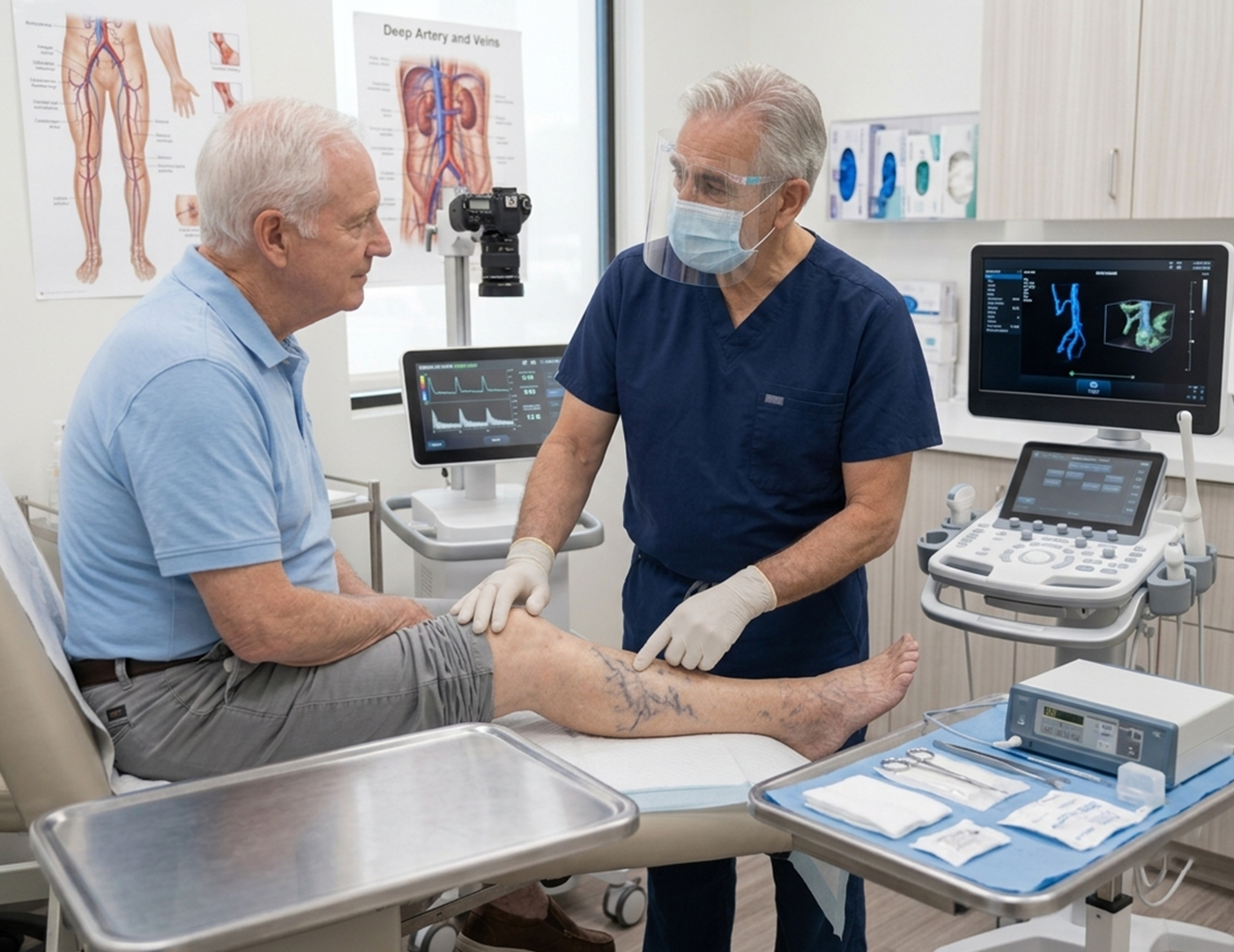
By the end of a long day, your legs feel heavier than they should. There’s a dull ache behind the knee, a swelling around the ankle that wasn’t there at breakfast, and a rope of bluish veins along the calf that has slowly become harder to ignore. You tell yourself it’s just age, or standing too long, or the weather. Then one morning the ache is still there before you’ve even gotten out of bed.
That is usually the moment people start searching for varicose vein treatment near me, and it’s the right instinct. Varicose veins are not only a cosmetic concern. They are a sign that the valves inside your leg veins are failing to push blood back up to the heart, and the longer that goes untreated, the more discomfort, swelling, and skin damage tend to follow.
The good news is that vein care has changed dramatically in the last decade. The old image of painful vein stripping surgery and weeks of recovery is outdated. Today’s treatments are minimally invasive, performed in under an hour, and most patients walk out the same day and return to normal activity within 24 to 48 hours.
This guide walks through what varicose veins actually are, the warning signs that mean it’s time to act, the modern treatments available, and how to choose the right provider when you start looking for varicose vein treatment near me.
What Varicose Veins Actually Are
Healthy leg veins contain one-way valves that open to let blood flow upward toward the heart and close to stop it from flowing backward. When those valves weaken, blood pools in the lower leg instead of moving on. The pressure inside the vein rises, the vein walls stretch, and the result is the bulging, twisted, rope-like vein you can see beneath the skin.
Spider veins are a related but milder version of the same problem, appearing as thin red or purple webs near the surface. Varicose veins are larger, raised, and far more likely to cause physical symptoms rather than only visible ones.
Why Varicose Veins Develop
Several factors push the vein valves toward failure, and most patients have more than one working against them at the same time.
- Genetics. A family history of vein disease is one of the strongest predictors of developing it yourself.
- Prolonged standing or sitting. Teachers, nurses, hairstylists, retail workers, and long-haul drivers all face higher risk because gravity is working against vein return for hours at a stretch.
- Pregnancy. Increased blood volume and hormonal changes relax vein walls, which is why varicose veins often appear or worsen during and after pregnancy.
- Age. Vein valves naturally weaken over time, which is why symptoms often arrive in the 40s and 50s.
- Weight. Extra body weight increases the pressure on leg veins.
- Hormonal shifts. Estrogen and progesterone fluctuations, including those from hormone therapy, can soften vein walls.
None of these guarantee vein disease, but stacking two or three of them makes it likely enough that proactive care pays off.
Symptoms That Are Easy to Dismiss but Shouldn’t Be
The visible bulging vein gets the attention, but the symptoms that actually drive people to seek varicose vein treatment near me are usually the ones happening underneath.
Watch for:
- A heavy, tired, or aching feeling in the legs, especially by evening
- Swelling around the ankles or lower calves
- Burning, throbbing, or muscle cramps at night
- Itching skin over a vein
- Restless legs that ease only when you move
- Skin discoloration, hardening, or darkening near the ankle
- A vein that becomes painful, warm, or tender to the touch
- An open sore near the ankle that is slow to heal
That last one matters most. A venous ulcer is a sign the disease has progressed to the point of damaging the skin itself, and at that stage treatment is no longer optional. If you see one, finding varicose vein treatment near me that includes vascular evaluation should move to the top of the list.
Why Treating Varicose Veins Early Is Worth It
Untreated venous insufficiency rarely stays still. Veins that are failing today tend to recruit nearby veins into the same pattern, which is why patients who wait often end up needing more procedures than patients who address the problem early.
Beyond the cosmetic and comfort improvements, early treatment helps prevent:
- Chronic leg swelling that becomes harder to reverse over time
- Skin changes including hyperpigmentation and a leathery texture called lipodermatosclerosis
- Venous ulcers near the ankle that can take months to heal
- Superficial thrombophlebitis, a painful clot in a surface vein
- Bleeding from a varicose vein close to the skin
Treating the underlying valve problem early is almost always simpler, faster, and less expensive than treating the complications that follow it.
Modern Varicose Vein Treatments
The right approach depends on which veins are involved and how advanced the disease is. A proper evaluation starts with a duplex ultrasound, which maps blood flow and identifies exactly which valves are failing. Treatment then targets those specific veins.
| Treatment | How It Works | Best For | Downtime |
|---|---|---|---|
| Endovenous laser ablation (EVLA) | A thin laser fiber heats and seals the diseased vein from the inside | Large saphenous vein reflux | Walk out same day, light activity next day |
| Radiofrequency ablation (RFA) | Uses radiofrequency energy instead of laser to seal the vein | Same as EVLA, slightly less post-procedure discomfort for some patients | Same day return to normal activity |
| VenaSeal (medical adhesive) | A medical-grade adhesive closes the vein, no heat involved | Patients who prefer to skip compression stockings afterward | Minimal, often back to work immediately |
| Sclerotherapy | A solution injected into the vein causes it to collapse and fade | Smaller varicose veins and spider veins | Resume activity same day |
| Ambulatory phlebectomy | Bulging surface veins removed through tiny punctures | Large, ropey veins close to the skin | Walking the same day, light activity within 24 hours |
| Compression therapy | Graduated stockings to support vein return | Mild cases, pre-treatment management, post-procedure healing | None |
Vein stripping, the older surgical approach, has largely been replaced by these in-office procedures, which use local anesthesia rather than general, leave no significant scarring, and let patients return to normal life almost immediately.
What a First Visit Actually Looks Like
When you book the first appointment, expect a thorough evaluation rather than a quick glance at the visible veins. A specialist will take a focused history covering symptoms, family history, pregnancies, occupation, and any prior vein treatment. A duplex ultrasound usually follows, performed standing so the veins are loaded the way they are in daily life.
From there, you should leave with a clear picture of which veins are causing the symptoms, which treatment matches your anatomy, what your insurance is likely to cover, and a realistic timeline for relief. Most insurance plans cover medically necessary vein treatment once symptoms and ultrasound findings document venous insufficiency, which is another reason a proper evaluation matters more than a cosmetic consultation alone.
How to Choose the Right Provider
When you search for varicose vein treatment near me, you’ll find everything from medical spas offering cosmetic injections to vascular surgery practices managing the full spectrum of vein disease. The difference matters.
Look for a provider who:
- Performs duplex ultrasound on site rather than working from a visual exam alone
- Is led by a board-certified vascular or general surgeon, not only an aesthetic practitioner
- Offers more than one treatment modality, since no single technique fits every vein
- Handles complications in-house, including ulcers, skin changes, and clotting
- Explains insurance coverage clearly before any procedure is scheduled
- Sets a follow-up plan, since vein disease benefits from periodic monitoring even after successful treatment
A good clinic should be able to walk you through their ultrasound findings on a screen and show you exactly which vein is the source of the problem. If the recommendation feels generic or rushed, it’s reasonable to get a second opinion.
What Recovery Really Feels Like
For most modern vein procedures, recovery is far gentler than patients expect. You’ll typically wear a compression stocking for a few days to a couple of weeks, depending on the procedure. Walking is encouraged the same day because movement helps circulation and reduces clot risk. Strenuous exercise is usually paused for about a week. Mild soreness or bruising along the treated vein is normal and fades over days.
Symptom relief often starts within the first couple of weeks, with the fuller benefit, including reduced swelling and lighter-feeling legs, settling in over the following one to three months as the body reabsorbs the closed vein.
The Bottom Line
Heavy, aching, swollen legs and bulging veins are not something you have to live with, and they are not something that quietly improves on its own. Modern vein care is faster, less invasive, and more effective than what was available even ten years ago. At Mission Surgical Clinic, we diagnose and treat the underlying valve problem using advanced, minimally invasive procedures, helping you find lasting relief and get back to living comfortably.
If those evening aches and visible veins have been on your mind long enough that you’ve started searching for varicose vein treatment near me, that instinct is worth following. A proper ultrasound-based evaluation is usually all it takes to understand what’s actually happening in your legs and what relief would look like.
Frequently Asked Questions
How do I know if I need varicose vein treatment?
If you have visible bulging veins along with symptoms like heaviness, aching, swelling, night cramps, itching, or skin changes near the ankle, you are a likely candidate for evaluation. A duplex ultrasound is the only reliable way to confirm whether the valves in your veins are failing.
Is varicose vein treatment painful?
Modern treatments like endovenous laser ablation, radiofrequency ablation, and VenaSeal are performed under local anesthesia and most patients describe mild pressure rather than pain. Soreness afterward is typically minor and short-lived.
How long does recovery take?
Most patients walk the same day and return to normal daily activity within 24 to 48 hours. Strenuous exercise is usually paused for about a week. Symptom relief builds over the following weeks as circulation improves.
Does insurance cover varicose vein treatment?
Most insurance plans cover treatment that is medically necessary, meaning symptoms and ultrasound findings document venous insufficiency. Purely cosmetic spider vein treatment is typically not covered. A reputable clinic will verify benefits before scheduling.
Will varicose veins come back after treatment?
The specific vein that’s treated is permanently closed and reabsorbed by the body. However, vein disease can progress in other veins over time, which is why periodic follow-up is recommended. Compression stockings and regular movement help reduce recurrence.
Where can I find varicose vein treatment near me?
Search for a vascular surgery practice that performs duplex ultrasound on site and offers multiple treatment modalities rather than a single technique. Board-certified vascular or general surgeons are best equipped to handle both straightforward cases and complications like ulcers or skin changes.
Related posts


