

Diabetic Wound Care Near You: Support Healing & Prevent Complications
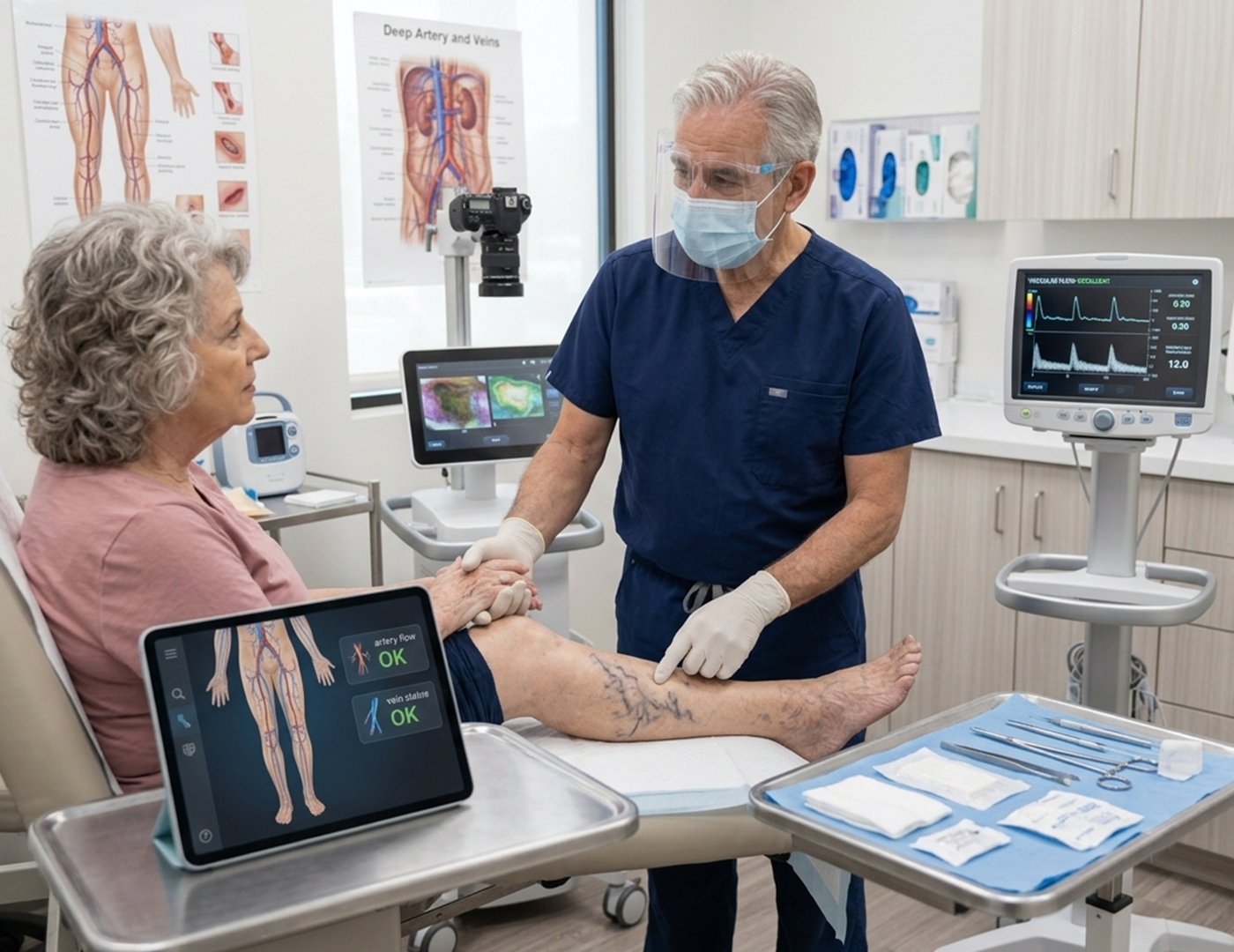
You’ve probably already searched “vascular surgeon near me” once or twice. Maybe you got a list of names, a few star ratings, and a handful of clinic websites that all say more or less the same thing. And now you’re sitting with a harder question: how do you actually know which one is right for you?
That’s not a small question. Vascular surgery deals with the network of arteries and veins that carry blood to every part of your body. Getting care from the wrong provider, or delaying care while you try to figure it out, can mean the difference between a straightforward recovery and a serious, long-term complication. The stakes are real, and the decision deserves more than a quick scroll through search results.
What makes this harder is that most vascular surgery clinics look similar from the outside. They all list the same conditions. They all mention experienced surgeons. They all have before-and-after patient stories on their websites. Knowing which one will actually deliver the right care for your specific situation requires looking past the surface, and that’s exactly what this guide helps you do.
This guide exists to make that decision easier. Not by listing every vascular surgeon near me result in your zip code, but by giving you the questions, the context, and the clarity to walk into a consultation knowing exactly what to look for and what to walk away from.
First, Understand What Vascular Surgeons Actually Treat
The term “vascular” covers a wide range of conditions, and not every surgeon handles all of them equally. Some practices specialize heavily in arterial disease. Others focus primarily on venous conditions. A smaller number take a genuinely comprehensive approach that includes wound care, diabetic foot management, and the full range of both arterial and venous problems. Before you start comparing providers, it helps to know where your condition fits and what kind of expertise it actually requires.
Arterial conditions involve the vessels that carry oxygenated blood away from the heart and out to the rest of the body. Peripheral arterial disease (PAD), carotid artery disease, aortic aneurysms, and arterial blockages that cause leg pain or non-healing wounds all fall into this category. These tend to be the higher-stakes conditions. Untreated arterial disease can lead to stroke, limb loss, or rupture, and symptoms like leg cramping during walks, coldness in the feet, or wounds that refuse to close deserve prompt evaluation rather than a wait-and-see approach.
Venous conditions involve the vessels that return blood to the heart. Varicose veins, chronic venous insufficiency, venous ulcers, and deep vein thrombosis (DVT) are common examples. These are often more gradual in their progression, but they are not minor. Venous disease left untreated can cause significant tissue damage, chronic swelling, skin discoloration, and open sores on the lower legs that become increasingly difficult to manage. Many patients live with venous symptoms for years before seeking care, and by the time they do, the condition is often more advanced than it needed to be.
Wound care with a vascular component is a category that surprises many patients who come in expecting a simple skin-level fix. A wound that won’t heal, especially on the foot or lower leg, is frequently caused by poor arterial or venous circulation rather than a skin problem. Without addressing the circulation issue driving it, no dressing or topical treatment will produce lasting results. A vascular surgeon who handles wound care understands that treating the wound without treating the circulation underneath is like mopping a floor while the ceiling is still leaking. The wound may temporarily improve, but it will keep reopening until the root cause is resolved.
Diabetic vascular complications represent their own category, and one that calls for particular urgency. Diabetes affects both the small vessels that supply nerves and the larger vessels that supply the legs and feet. The result is a combination of reduced sensation and reduced circulation that allows wounds to develop and progress without the patient even feeling them. Diabetic foot wounds that might look minor can reach bone-level infection within weeks when circulation is severely compromised. This is why diabetic patients are almost always better served by a vascular surgeon than by a general practitioner when it comes to foot and lower limb concerns.
Knowing which category your situation falls into helps you ask better questions and spot providers who specialize in your area of need versus those who take a more generalized approach.
The Difference Between a Good Surgeon and the Right Surgeon
Credentials matter, but they’re the floor, not the ceiling. Board certification in vascular surgery tells you a surgeon has met the baseline standard of training and examination required to practice. What tells you far more about the quality of care you’ll receive is how they actually practice once you’re in the room.
Here’s what actually separates a good vascular surgeon from the right one for you:
They look for the cause, not just the symptom. A surgeon who jumps straight to treatment without taking time to diagnose the underlying driver of your condition is skipping a step that defines everything that follows. Good vascular care starts with understanding why your arteries or veins are behaving the way they are. Whether that’s atherosclerosis building up over decades, a venous valve that has stopped functioning properly, or diabetes slowly damaging the circulation in your feet, treatment without that foundation tends to be temporary at best. The wound closes, the vein is treated, and six months later you’re back with the same problem because nothing addressed what caused it.
They have vascular testing in-house. Diagnostic tools like ankle-brachial index (ABI) testing, Doppler ultrasound, and duplex imaging are how vascular surgeons see inside your circulation without surgery. These tests map blood flow, identify blockages, and reveal how well your veins are functioning before a single treatment decision is made. A practice that sends you elsewhere for these tests and asks you to wait weeks for results is adding delay to a situation that usually calls for speed. In-house vascular testing means faster answers, fewer appointments across different locations, and a clearer picture of what’s actually happening before anyone recommends a procedure.
They offer a range of treatment options. Vascular care has evolved significantly over the past two decades. Many conditions that once required open surgery with long recoveries can now be treated through minimally invasive endovascular procedures with smaller incisions, shorter recovery times, and less disruption to your life. Venous conditions that used to require surgical stripping are now routinely handled through laser ablation or sclerotherapy. Arterial blockages that once meant major surgery can often be addressed through catheter-based angioplasty. A surgeon who only offers one approach may be offering the one they know best rather than the one that fits your situation best. You want a provider whose toolbox matches the full scope of what modern vascular surgery can do, and who selects from it based on your needs.
They coordinate care rather than silo it. Vascular conditions rarely exist in isolation. A patient with a non-healing foot wound often has underlying diabetes, and that diabetes affects healing, infection risk, and treatment planning in ways that extend well beyond the wound itself. A vascular surgeon who works within a broader clinical team, connecting with endocrinologists, wound care specialists, or other surgeons as needed, delivers meaningfully better outcomes than one who manages everything independently without that context. When you’re evaluating a provider, ask how they handle cases that involve multiple conditions or specialties.
They treat you like a partner, not a patient number. This one is harder to quantify, but you’ll feel it quickly. Does the surgeon explain what they found and why they’re recommending what they’re recommending? Do they answer your questions without making you feel like you’re wasting their time? Do they set clear expectations about recovery, follow-up, and what success looks like over the coming weeks and months? Vascular conditions often require ongoing monitoring and adjustment. A surgeon you trust and can communicate with openly is going to serve you far better over the long run than one who is technically skilled but difficult to access or understand.
Questions Worth Asking Before You Commit
A first consultation is as much your evaluation of the surgeon as it is theirs of you. Most patients go in expecting to be assessed and told what to do next. The better approach is to come prepared with your own questions and use the answers to judge whether this is the right provider for your care. These are the questions that tend to reveal the most:
“What is causing this condition, not just what is the condition?” Listen carefully for whether the answer addresses root cause. A strong answer names the underlying mechanism, whether that’s circulation problems, valve failure, arterial narrowing, or systemic factors like diabetes, rather than just restating the diagnosis. If the surgeon can tell you why this is happening, they’re thinking about your care in the right way.
“What are all my options, and why are you recommending this one?” A surgeon who can walk you through more than one treatment pathway and clearly explain the tradeoffs of each is giving you a real picture of your situation. One who presents a single option as the obvious or only choice may not be offering a truly individualized recommendation. You’re not obligated to choose something just because a surgeon presented it confidently.
“Will my vascular testing be done here, or will I need to go somewhere else?” In-house diagnostics streamline your care significantly and reduce the time between assessment and treatment. If testing is referred out, ask how long it typically takes to get results back, how those results are communicated to you, and how that affects the overall treatment timeline. Weeks of waiting on test results is not unusual at some practices, and it matters.
“What does follow-up look like after treatment?” Vascular conditions don’t always resolve completely after a single procedure. Venous disease in particular has a tendency to recur if the underlying causes aren’t managed long-term. Some patients need compression therapy, dietary and lifestyle changes, or periodic imaging to monitor their circulation over time. Understanding the full arc of care before you begin helps you plan realistically and avoids the surprise of ongoing appointments you weren’t expecting.
“Have you treated cases like mine before, and what did outcomes look like?” Volume and experience with specific conditions matters more in vascular surgery than in many other fields. A surgeon who regularly treats diabetic foot wounds has encountered the complications, the nuances of wound staging, and the decisions about when to escalate to more aggressive intervention in ways that someone who sees them occasionally simply has not. Ask specifically, not generally.
“What would be a reason to call you before my next scheduled appointment?” This question tells you a lot about how a practice thinks about post-treatment care. A good answer lists specific warning signs they want you to watch for and gives you a clear, accessible way to reach the team when something concerns you. A vague answer about calling if you feel unwell is not sufficient.
Red Flags to Watch For
Most providers are acting in good faith and genuinely want to help their patients. But the structure of how some practices operate can work against you, even without anyone intending harm. These are the patterns worth noticing before you commit to care.
A practice that pushes toward a specific procedure in the first appointment, before completing a full diagnostic workup, is moving too fast. A thorough vascular evaluation takes time. It involves gathering history, conducting a physical exam, reviewing imaging, and often completing in-house vascular testing before any treatment recommendation should be made. If you feel like the decision was made before the assessment was really finished, trust that instinct.
A provider who can’t explain why they’re recommending what they’re recommending, in terms you can actually understand, is either not customizing care to your situation or not communicating clearly enough to be a useful partner in your recovery. Both are problems. You don’t need to understand the surgical technique in detail, but you should absolutely understand why this approach was chosen for your specific case and what it’s intended to accomplish.
A long gap between your initial consultation and the start of treatment isn’t always avoidable, but for arterial conditions especially, it’s worth asking whether the timeline is appropriate given your symptoms. Some vascular conditions worsen quickly. Peripheral arterial disease can progress to critical limb ischemia. A wound with arterial involvement can deteriorate in a matter of weeks. If the practice is scheduling two months out for a condition that’s actively changing, that’s a conversation worth having directly.
A lack of clear communication about costs, insurance coverage, and the expected number of visits is also worth noting. It doesn’t disqualify a provider, but a practice that can’t answer basic questions about what your care will involve logistically is often one that isn’t well-organized in other ways too.
Why Location Matters More Than You Might Think
Searching “vascular surgeon near me” isn’t just about convenience, though convenience matters more than people give it credit for. Proximity to your care provider has real clinical implications in vascular surgery, particularly for conditions that require ongoing management.
Post-procedure follow-up visits happen frequently in the weeks after treatment. Depending on the procedure, you may be seen weekly for wound checks, compression adjustments, or imaging to confirm the treatment worked. A specialist who’s far away makes it easy to skip or delay appointments that actually matter for catching early complications and confirming your recovery is on track. A provider close to home, especially one with in-house testing, removes that friction and makes it far more likely that you’ll stay consistent with your care schedule.
For patients managing chronic venous disease, diabetic circulation problems, or non-healing wounds, care can stretch over months or even longer. That kind of sustained relationship works significantly better when getting to the clinic doesn’t feel like a project. Patients who find their provider inconvenient to reach tend to miss follow-ups, let symptoms slide, and end up presenting later with more advanced problems than they would have if access had been easier.
And in urgent situations like a wound that’s worsening quickly, new symptoms of arterial insufficiency, or a suspected DVT, access matters immediately. A provider who’s close, reachable by phone, and able to see you the same day or next day is a fundamentally different resource than one who requires advance scheduling and is an hour’s drive away. Knowing your vascular care is nearby and reachable is a form of medical security that has genuine value.
The regional context of where you live also matters. Areas with high rates of diabetes and heat-related dehydration, like much of Southern California and the Inland Empire, see a disproportionate share of diabetic foot wounds, venous ulcers, and arterial complications related to those conditions. A vascular surgeon who practices in and understands your region will have seen your condition in its local context and will be more familiar with the complicating factors specific to that population.
What to Expect at Your First Appointment
Knowing what a strong first visit looks like helps you evaluate whether the care you’re receiving matches what good vascular medicine actually involves. A thorough first appointment should never feel rushed, and it should leave you with more clarity than you arrived with, not less.
It starts with a detailed history covering not just your current symptoms, but your full cardiovascular history, diabetes status, current medications including blood thinners and blood pressure medications, smoking history, prior procedures on veins or arteries, and any relevant family history of vascular disease. These details shape the entire diagnostic and treatment picture. The more complete that history is, the more accurately your surgeon can identify what’s driving your condition and what’s likely to work.
From there, a physical exam checks pulses at multiple points in the legs and feet, assesses skin color and temperature, looks for signs of venous congestion or arterial compromise, and examines any active wounds for depth, tissue quality, and signs of infection. This hands-on assessment is irreplaceable and should not be skipped in favor of jumping directly to imaging.
If circulation is a concern, and in most cases it is, vascular testing follows either in the same visit or immediately scheduled after. Ankle-brachial index testing gives a quick initial read on arterial blood flow. Duplex ultrasound can map venous reflux and identify blockages in greater detail. The results of these tests directly determine what comes next, so having them done promptly rather than weeks later is a meaningful advantage.
By the end of that first appointment, you should leave with a clear working understanding of what’s happening, what additional information is needed and when you’ll have it, and what the likely next step looks like. You should also know how to reach the practice if something changes before your follow-up. If you leave more confused than when you arrived, or without a clear plan for what happens next, that’s worth paying attention to.
The Bigger Picture
Choosing a vascular surgeon isn’t like picking a restaurant or scheduling a routine checkup. You’re choosing someone who is going to evaluate your arteries and veins, the infrastructure your entire body depends on, and make recommendations that can affect how you feel and function for years. At Mission Surgical Clinic, we believe patients deserve experienced, compassionate vascular care backed by careful diagnosis and personalized treatment plans.
That deserves more than a star rating and a short drive.
The good news is that once you know what to look for, the right provider becomes much easier to identify. Someone who takes time to understand the root cause of your condition, has the diagnostic tools to investigate it properly, offers a genuine range of treatment options, coordinates with other specialists when needed, and communicates clearly with you throughout. That combination isn’t rare, but it’s specific enough that it narrows the field considerably.
When you find a practice that fits that description, the difference in your experience and your outcomes will be clear. Appointments will feel productive. Your questions will get answered. Your treatment plan will make sense to you. And when something comes up between visits, you’ll know exactly who to call and feel confident they’ll respond.
Take the time to find it. Your circulation is worth that.
Frequently Asked Questions
What conditions does a vascular surgeon treat?
Vascular surgeons treat conditions affecting arteries and veins throughout the body, outside the heart. Common examples include peripheral arterial disease, carotid artery disease, aortic aneurysms, varicose veins, chronic venous insufficiency, deep vein thrombosis, and non-healing wounds caused by poor circulation. Many vascular surgeons also manage diabetic foot complications and provide wound care for patients whose healing is affected by arterial or venous disease.
How do I know if I need a vascular surgeon or a different type of specialist?
If your symptoms involve leg pain when walking, leg swelling that doesn’t resolve on its own, varicose veins causing discomfort or skin changes, wounds on the feet or lower legs that aren’t healing, numbness or coldness in the extremities, or any diagnosis involving arteries or veins outside the heart, a vascular surgeon is the appropriate starting point. Your primary care provider can also help confirm the referral and provide relevant medical history to bring to your consultation.
What’s the difference between a vascular surgeon and a cardiologist?
Cardiologists focus primarily on the heart and the coronary arteries that supply it. Vascular surgeons specialize in blood vessels throughout the rest of the body, including the peripheral arteries and veins in your legs, arms, neck, and abdomen. Some conditions involve both the heart and the peripheral vasculature, and in those cases, coordinated care between the two specialties is common. If you’ve been referred specifically for a leg, foot, or abdominal vascular concern, a vascular surgeon is typically the right first stop.
Is vascular surgery always surgical?
No. Many vascular conditions are now treated through minimally invasive endovascular techniques, which are catheter-based procedures that don’t require traditional open surgery. Others are managed effectively with medication, compression therapy, lifestyle changes, or a combination of approaches. Surgery in the traditional sense is reserved for cases where less invasive options aren’t sufficient or where the anatomy makes a catheter-based approach impractical. A thorough evaluation will clarify which approach is appropriate for your specific situation.
How long does recovery from a vascular procedure take?
Recovery varies widely depending on the procedure and the individual patient. Minimally invasive endovascular procedures often involve a recovery of days to a few weeks, with most patients returning to normal activities relatively quickly. Open surgical repairs, such as those for aortic aneurysms or arterial bypass, may require a longer hospital stay and several weeks of limited activity before you’re back to full function. Your surgeon should walk you through a realistic and specific timeline based on your procedure before you commit to moving forward.
Does insurance cover visits to a vascular surgeon?
Most insurance plans cover vascular surgery consultations and treatments, particularly when there is a documented medical need such as a non-healing wound, diagnosed arterial or venous disease, or a referral from a primary care provider. Coverage details vary by plan, and some procedures may require prior authorization. Confirming your specific coverage with your insurer before your first appointment is always the most reliable approach, and a well-organized practice should be able to help you navigate that process.
What should I bring to my first vascular surgery consultation?
Bring a complete list of your current medications including dosages, any prior imaging such as ultrasounds, CT scans, or MRI results related to your condition, a written summary of your relevant medical history including prior vascular or cardiac procedures, and a list of your questions. If you have photos of a wound that has changed over time, those can be genuinely useful for the surgeon to see its progression. The more complete the picture you bring in, the more productive and efficient that first visit will be.
Related posts


