

Hyperbaric Oxygen Therapy Near You: Benefits for Wound Healing & Recovery
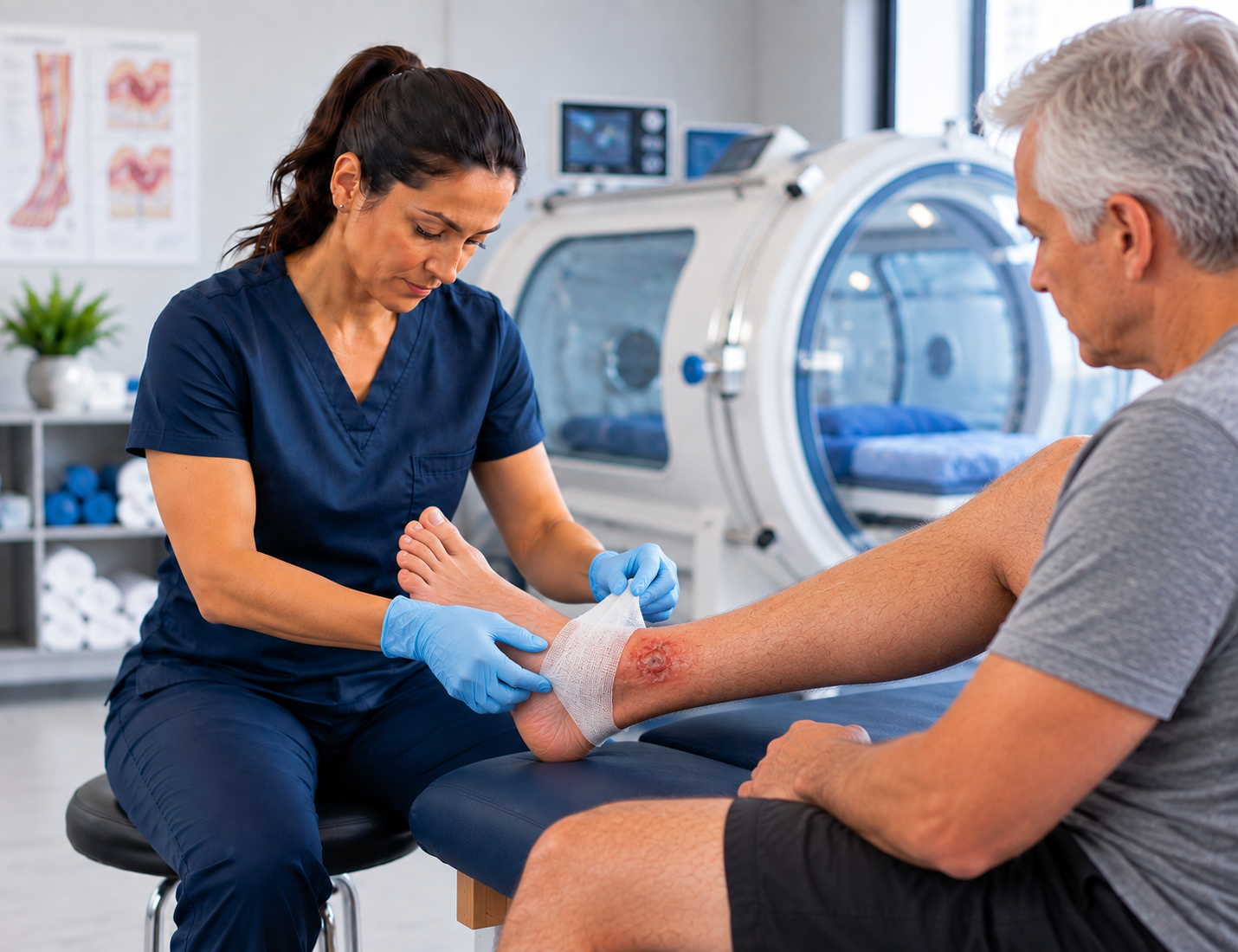
Picture a plant that’s not getting enough water. You can trim the dead leaves, change the soil, do everything right on the surface, but until the roots get what they actually need, nothing changes. Wounds work the same way. You can clean them, dress them, and be patient with them, but if the tissue underneath isn’t getting enough oxygen, healing simply stalls.
That’s the problem HBOT for wounds is built to solve.
Hyperbaric oxygen therapy doesn’t replace good wound care. It works alongside it, addressing something that bandages and antibiotics alone can’t fix: a shortage of oxygen at the cellular level. For wounds that have stopped making progress, that shortage is often the missing piece.
If you’ve been told your wound isn’t healing the way it should, or you’re trying to understand why HBOT keeps coming up in conversations with your care team, this guide breaks down what the therapy actually does, who it helps, and what real treatment looks like from start to finish.
Key Takeaways
- HBOT for wounds works by dissolving extra oxygen directly into the blood plasma, reaching tissue that damaged blood vessels can’t supply on their own.
- It’s most effective for wounds where poor oxygen delivery, not just poor care, is the reason healing has stalled.
- Candidates typically include diabetic ulcers, radiation-damaged tissue, certain infections, and grafts at risk of failing.
- A full course of treatment usually runs daily sessions over several weeks, not a one-time fix.
- HBOT works best as part of a coordinated plan that also addresses infection, circulation, and pressure, not as a standalone solution.
- Early evaluation matters. Wounds that sit untreated for months are harder to turn around than wounds caught early.
Why Some Wounds Need More Than a Bandage
Every wound needs oxygen to heal. It fuels new tissue growth, helps the body fight off bacteria, and drives collagen production, which is what actually closes a wound and rebuilds skin.
Under normal circumstances, your red blood cells deliver that oxygen just fine. But damaged or narrowed blood vessels, the kind you see with diabetes, radiation exposure, or severe injury, can’t always get enough blood, and therefore enough oxygen, to where it’s needed.
This is where HBOT for wounds changes the equation. Inside a pressurized chamber, you breathe concentrated oxygen, and that pressure forces extra oxygen to dissolve directly into your blood plasma, the liquid part of blood that doesn’t rely on red blood cells to carry it. That oxygen-rich plasma can reach tissue that’s been running on empty, sometimes for months.
Think of it less like a temporary boost and more like unclogging a supply line. Once oxygen starts reaching the tissue again, the body’s own repair systems, the ones that were stalled from lack of fuel, can finally get back to work.
How HBOT Actually Speeds Wound Healing
The extra oxygen delivered during HBOT triggers a handful of specific responses in the body, and each one plays a role in getting a stalled wound moving again.
- New blood vessel growth. Oxygen-rich tissue sends a signal to the body to build fresh capillaries, gradually improving blood flow to the area on its own, not just during treatment.
- Better infection control. Many of the bacteria that thrive in chronic wounds prefer low-oxygen environments. Raising tissue oxygen levels makes it harder for them to survive, while also supporting the immune cells responsible for clearing infection. HBOT is used alongside antibiotics and proper wound care, not instead of them.
- Reduced swelling. Increased oxygen helps control inflammation and fluid buildup in damaged tissue, which matters because swelling itself can choke off the healing process.
- Stronger collagen production. Collagen is the protein that gives new tissue its structure. Without enough oxygen, the body can’t produce it efficiently, which is part of why some wounds seem to just sit there indefinitely.
None of these effects happen instantly. They build session by session, which is why HBOT for wounds is typically prescribed as a course of treatment rather than a single visit.
Who Actually Qualifies for HBOT
HBOT isn’t recommended for every wound that’s taking a while to close. It’s reserved for cases where low tissue oxygen is genuinely part of the problem, and a specialist needs to confirm that before treatment starts.
Wounds commonly treated with HBOT include:
- Diabetic foot ulcers that haven’t responded to standard wound care, especially when circulation to the area is compromised.
- Non-healing surgical wounds, often where infection or poor blood supply is interfering with normal closure.
- Radiation injury, where treatment for cancer has damaged blood vessels in the surrounding tissue, sometimes years after the original radiation.
- Chronic bone infections (osteomyelitis), where antibiotics alone struggle to reach deep-seated infection.
- Skin grafts and flaps that are at risk of failing due to insufficient blood supply.
- Crush injuries, where trauma has damaged blood vessels and left tissue oxygen-starved even after the initial injury has been treated.
Take a diabetic foot ulcer as an example. Diabetes often narrows the small blood vessels that supply the feet, so even a minor wound can stall for months despite careful daily care. If imaging and testing confirm that the tissue around the wound simply isn’t getting enough oxygen, HBOT gives the body what standard dressing changes can’t: a direct route to get oxygen where circulation alone can’t take it.
What Happens Before Treatment Starts
Before anyone steps into a hyperbaric chamber, a proper evaluation needs to happen. This isn’t a formality. It’s what determines whether HBOT is actually going to help.
A thorough workup usually includes:
- A detailed history, covering how long the wound has been present, what’s already been tried, and underlying conditions like diabetes or prior radiation therapy.
- Transcutaneous oxygen measurement (TCOM), a test that measures how much oxygen is actually reaching the tissue around the wound, and helps predict whether HBOT is likely to help.
- Vascular testing, to rule out or address circulation issues that might need treatment on their own.
- Wound cultures, if infection is suspected, to identify exactly what’s present and guide antibiotic treatment alongside HBOT.
Skipping this step is how patients end up in a chamber for weeks without meaningful results. HBOT works when it’s targeted at the right problem, not applied as a blanket fix for any wound that’s taking longer than expected.
What a Course of HBOT Actually Looks Like
A single HBOT session typically runs 90 minutes to two hours, including the gradual pressurization and decompression at the start and end. You’ll lie comfortably inside a chamber that’s usually clear, so you can see out and stay in contact with your care team the entire time.
As pressure builds, you’ll feel something similar to the ear pressure on a flight or a dive. Your care team will walk you through relieving it by swallowing or yawning. Once the chamber reaches full pressure, there’s nothing left to do but breathe normally. Most patients read, watch something, listen to music, or just rest.
For chronic wounds, treatment plans commonly involve daily sessions, five days a week, and can run anywhere from 20 to 40 or more sessions depending on the wound and how it’s responding. That’s a real commitment, which is part of why the upfront evaluation matters so much. Nobody wants to commit to six weeks of daily treatment for a wound that was never going to respond to HBOT in the first place.
Progress is tracked along the way, usually with photos and measurements, so your care team can confirm the wound is actually moving in the right direction and adjust the plan if it isn’t.
Is HBOT Safe?
For patients who’ve been properly screened, HBOT has a strong safety record. Most people describe the experience as uneventful, with mild ear pressure being the most common complaint.
Other things to be aware of include:
- Temporary sinus or ear discomfort during pressure changes
- Fatigue, especially in the early sessions of a treatment course
- Rare, temporary vision changes with extended treatment
- Claustrophobia, which your care team can help you manage
- Blood sugar fluctuations in people with diabetes, which are monitored throughout treatment
Your provider will review your full medical history before starting, since certain conditions require closer monitoring or may make HBOT unsuitable. This is exactly why HBOT for wounds should always be delivered by a team with real experience in hyperbaric medicine, not just access to a chamber.
Why Timing Matters More Than People Think
Here’s the part that gets overlooked. A wound that’s been open for three weeks and a wound that’s been open for eight months are not the same clinical picture, even if they look similar on the surface. The longer tissue goes without adequate oxygen, the more the surrounding area can be affected, and the harder it becomes to reverse.
Waiting to see if a stubborn wound “just needs more time” is a reasonable instinct for a minor cut. It’s a riskier bet for a wound that’s already shown it isn’t following a normal healing timeline. If a wound hasn’t visibly improved after several weeks of proper care, that’s the point to ask about HBOT for wounds, not months down the line when the tissue damage has had more time to spread.
Let’s Talk About Your Wound
Wounds that won’t heal take a toll that goes beyond the physical. The worry about infection, the disruption to daily life, the sense that your body isn’t doing what it’s supposed to do, all of that adds up.
At Mission Surgical Clinic in Riverside, CA, we start every case with a real evaluation, not a standard protocol applied to every wound that walks through the door. If HBOT is the right fit for your situation, we’ll build a plan around your specific wound, your specific cause, and your specific goals.
If you have a wound that isn’t healing the way it should, let’s talk about whether HBOT for wounds is the next right step for you.
Frequently Asked Questions
What does HBOT do for wounds specifically?
HBOT increases the amount of oxygen delivered to damaged tissue by dissolving extra oxygen directly into the blood plasma. That extra oxygen supports new blood vessel growth, helps control infection, and fuels the collagen production wounds needed to close.
How do I know if my wound qualifies for HBOT?
Generally, HBOT is considered for wounds that haven’t responded to standard care after several weeks, particularly diabetic ulcers, radiation injury, certain infections, and grafts at risk of failure. A specialist will confirm candidacy with testing like transcutaneous oxygen measurement before starting treatment.
How many HBOT sessions are usually needed for a wound to heal?
Most chronic wound treatment plans involve 20 to 40 or more sessions, often delivered daily over several weeks. The exact number depends on the wound, how it responds, and your provider’s recommendations.
Is HBOT painful?
No. The most common sensation is mild ear pressure, similar to a flight, which your care team will show you how to manage. The treatment itself doesn’t hurt.
Can HBOT replace other wound treatments?
No. HBOT is used alongside other treatments like debridement, infection management, and pressure offloading, not in place of them. It works best as part of a coordinated care plan.
Does insurance cover HBOT for wounds?
Many insurance plans cover HBOT when it’s used for medically recognized conditions like diabetic foot ulcers or non-healing surgical wounds. Coverage details vary, so it’s worth confirming your specific benefits before starting treatment.
Let’s Talk About Your Wound
Wounds that won’t heal take a toll that goes beyond the physical. The worry about infection, the disruption to daily life, the sense that your body isn’t doing what it’s supposed to do, all of that adds up.
At Mission Surgical Clinic in Riverside, CA, we start every case with a real evaluation, not a standard protocol applied to every wound that walks through the door. If HBOT is the right fit for your situation, we’ll build a plan around your specific wound, your specific cause, and your specific goals.
If you have a wound that isn’t healing the way it should, let’s talk about whether HBOT for wounds is the next right step for you.
Schedule Your Wound Evaluation
Related posts


